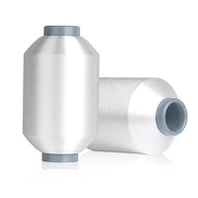
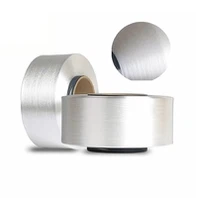
Low-melting fibers are the core materials of thermofusible yarn. Polymers such as , low-melting PET (modified Polyethylene Terephthalate)
1. Material Properties Comparison
| | | | Low-Melting PET |
|---|---|---|---|
| | 80–130 degree | 130–180 degree | 110–160 degree |
| | |||
| | |||
| | <1%) | High (e.g., PA6: ~3.5%) | <0.4%) |
| | Low (100–150 degree ) | Medium-high (150–200 degree ) | Medium (120–170 degree ) |
| | Recyclable; some bio-based variants |

2. Processing Performance
:
: Low-temperature melting, ideal for hot pressing, ultrasonic welding, and complex bonding; strong fluidity and elasticity.
:
:
: Cost-effective, wide processing window (extended melting range), excellent chemical resistance.
3. Key Applications
| | | |
|---|---|---|
| | ||
| | High-temperature and high-strength industrial uses | Automotive interiors (seats, headliners), fire-resistant gear, aerospace composites |
| | Cost-sensitive, chemically resistant daily goods |
4. Selection Guidelines
:
Low-temperature processing to protect heat-sensitive materials (e.g., foam).
Skin-contact products requiring softness and biocompatibility (e.g., medical textiles).
:
High-temperature environments (e.g., automotive engine components).
:
High-volume, low-cost production (e.g., disposable hygiene products).
Chemical-resistant industrial textiles (e.g., filters).
5. Innovations & Trends
: Bio-based TPU (e.g., castor oil-derived) for sustainability; light/heat dual-responsive TPU for smart textiles.
: Low-moisture variants (e.g., PA12) for stability; nanocomposite PA for enhanced heat resistance.
: Biodegradable blends (e.g., PLA/PET); low-temperature PET for improved fluidity in precision bonding.